

Introduction
For South Africa, Value-Added Tax (VAT) is a significant component of the tax system, impacting small and medium-sized enterprises (SMEs) substantially. With the standard VAT rate set at 15% (SARS), it is crucial for SMEs to not only comply with VAT regulations but also to optimize their VAT position to enhance financial clarity and reduce business risks.
This guide explores actionable VAT optimization strategies tailored for South African SMEs, aligning with the latest South African Revenue Service (SARS) guidelines and international best practices. The strategies presented aim to make compliance easy while supporting effective small business accounting.
Understanding VAT Optimization
VAT optimization involves structuring business operations and transactions to legally minimize VAT liabilities while ensuring compliance with tax laws. For SMEs, effective VAT optimization can lead to improved cash flow, reduced tax burdens, and enhanced financial clarity.
It is essential to differentiate between legitimate VAT optimization and tax avoidance. The latter involves illegal practices that can lead to severe penalties. SMEs must ensure that VAT strategies remain within the bounds of current law (SARS).
Accurate Classification of Input and Output VAT
Proper classification of input and output VAT is fundamental to VAT optimization. Input VAT refers to the VAT paid on business purchases, while output VAT is the VAT charged on sales. SMEs can claim input VAT on purchases related to taxable supplies, reducing their overall VAT liability (SARS VAT 404 Guide for Vendors).
Certain expenses, however, are not eligible for input VAT claims. For instance, VAT incurred on entertainment expenses and motor vehicles is generally non-deductible. Misclassification of expenses can result in over-claiming or under-claiming VAT, leading to potential penalties.
Leveraging VAT Filing Periods
The timing of VAT filings can significantly influence an SME's cash flow. SARS allows vendors to select VAT filing periods: monthly, bi-monthly, or annually; depending on the business's turnover (SARS VAT Obligations).
Aligning VAT filing periods with business cycles allows SMEs to manage tax liabilities more effectively. For example, opting for a two-monthly filing period can provide better cash flow management, allowing businesses to plan VAT payments efficiently and avoid unnecessary financial strain.
Utilizing VAT Exemptions and Zero-Rated Supplies
Certain goods and services are either exempt from VAT or zero-rated, meaning VAT is charged at 0%. SMEs should familiarize themselves with these exemptions to avoid charging VAT on exempt supplies and ensure compliance with SARS regulations (SARS VAT 404 Guide).
Zero-rated supplies, such as basic foodstuffs and specific educational services, allow businesses to recover input VAT while charging no VAT on sales. By strategically identifying and utilizing zero-rated transactions, SMEs can improve VAT recovery and reduce overall tax liability.
Implementing Technology and Automation in VAT Management
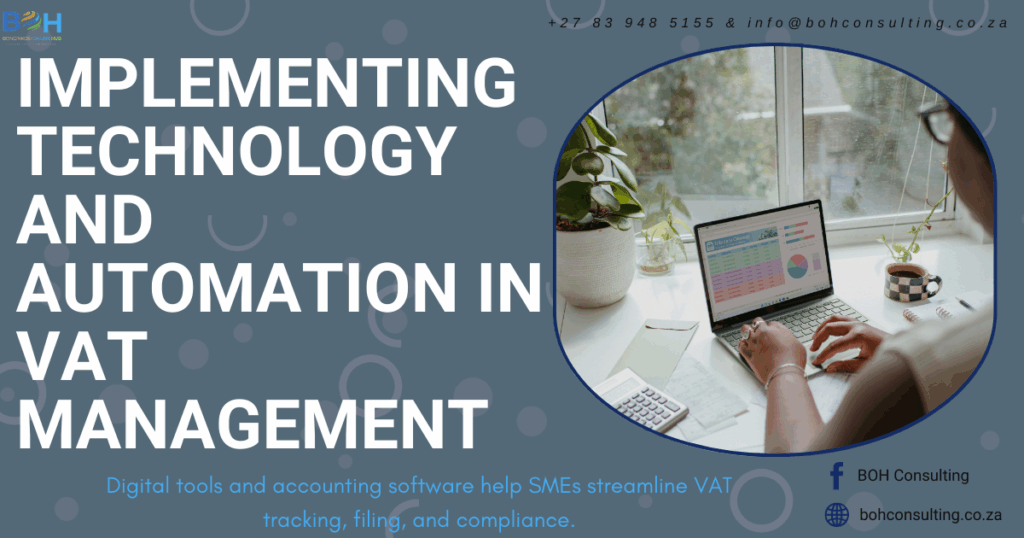
Accounting and VAT software streamline VAT management, improving accuracy and compliance. Automation tools can calculate VAT in real time, generate reports, and ensure that filing deadlines are met, reducing the risk of errors (Xeinadin).
Advanced software solutions also support SMEs in handling complex scenarios, such as cross-border transactions or mixed supplies. These tools help ensure adherence to SARS guidelines while reducing administrative burdens and operational inefficiencies.
Conducting Regular VAT Reviews and Audits
Routine internal VAT audits are essential for identifying discrepancies, ensuring compliance, and uncovering opportunities for VAT recovery. SMEs are encouraged to implement systematic review processes, either internally or with professional accounting support.
Regular VAT reviews also help SMEs stay informed of legislative updates, enabling timely adjustments to business practices. Keeping records accurate and up to date ensures that VAT optimization efforts remain compliant and effective, supporting financial clarity.
Navigating Complex VAT Scenarios
Certain transactions, such as mixed supplies or cross-border activities, require careful VAT treatment. SMEs should reference SARS guidance and consult qualified professionals when handling intricate VAT scenarios to prevent compliance issues.
Understanding the specific rules for different types of supplies and VAT rates ensures that SMEs can optimize VAT claims correctly without risking penalties. Proper guidance is critical when dealing with foreign transactions or multi-jurisdictional supply chains.
Staying Updated on Legislative Changes
SARS continually updates VAT regulations to address emerging challenges and improve compliance. The 2024 amendments to the VAT Act introduced important clarifications for SMEs, impacting filing procedures and input VAT claims (SARS VAT Connect, 2024).
SMEs should actively monitor SARS publications, attend workshops, or consult accounting advisors to remain compliant and adjust VAT strategies as regulations evolve. Staying informed ensures that VAT optimization remains effective and aligned with current standards.
Practical Steps for SMEs to Optimize VAT
- Regularly review expense classification: Ensure all input VAT claims are eligible and correctly categorized.
- Plan VAT filings around cash flow: Use filing periods strategically to align VAT payments with business revenue cycles.
- Identify zero-rated and exempt supplies: Maximize VAT recovery opportunities while remaining compliant.
- Leverage technology: Employ accounting and VAT automation software to reduce errors and administrative burden.
- Conduct periodic audits: Identify discrepancies, update processes, and uncover further optimization opportunities.
- Monitor legislative changes: Adjust VAT strategies according to SARS updates and international best practices.
These steps are grounded in evidence-based guidelines from SARS and international VAT recommendations, offering SMEs actionable tools for compliance made easy.
Conclusion
VAT optimization for South African SMEs is both a compliance necessity and a strategic financial opportunity. By accurately classifying VAT, leveraging filing schedules, utilizing exemptions and zero-rated supplies, implementing technology, conducting regular audits, and staying informed about legislative changes, SMEs can reduce business risks and achieve financial clarity.
Optimizing VAT not only safeguards compliance but also strengthens small business accounting processes, enabling sustainable growth and strategic financial management.